


Please Leave Us A Message
Privacy statement: Your privacy is very important to Us. Our company promises not to disclose your personal information to any external company with out your explicit permission.
 Yangzhou Zhenyue Brush Machinery Co.,Ltd.
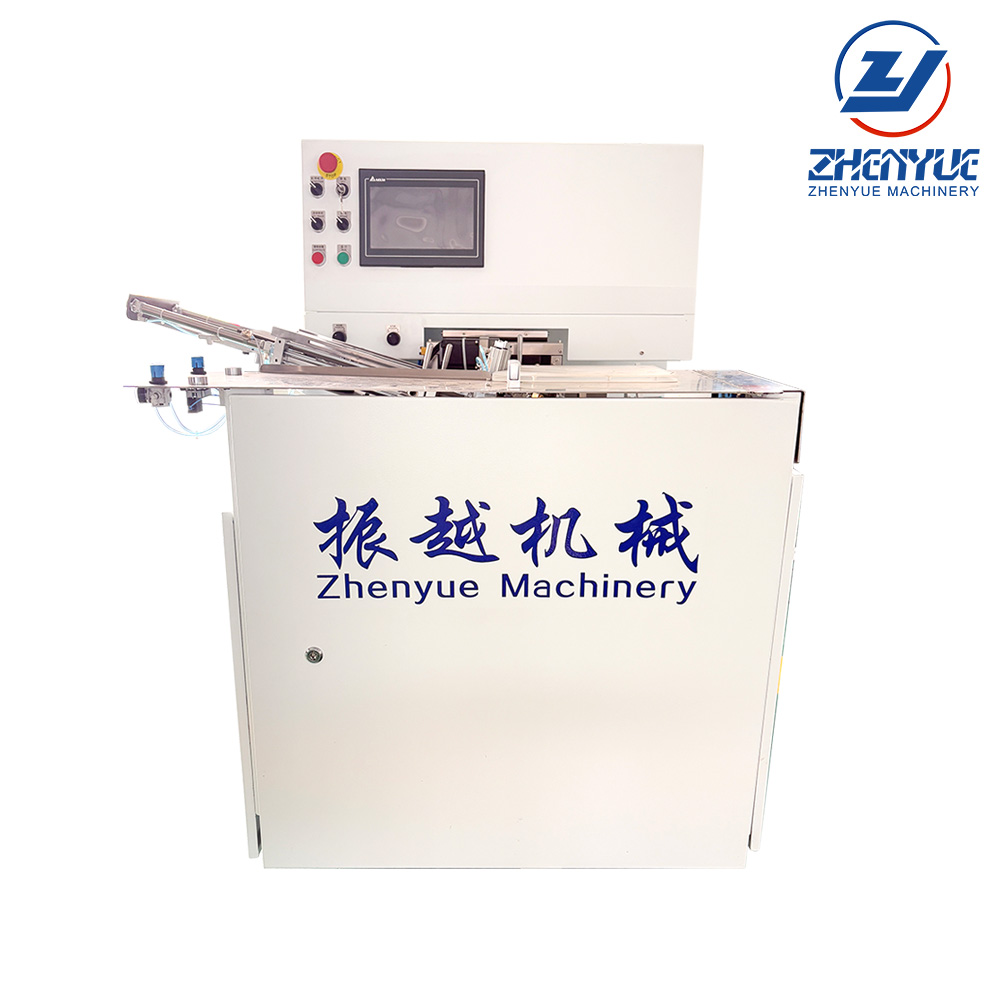
Manual brush heads are tufted almost vertically: a standard 3-axis Toothbrush Making Machine (X-Y positioning + Z tufting stroke) handles them fine. Electric heads break that assumption in three ways:
| Requirement | Manual head (3-axis OK) | Electric head (5-axis needed) |
| Head size | 25–32 mm wide | 16–22 mm neck width |
| Hole pitch | 2.0–2.5 mm | 1.2–1.8 mm |
| Tuft angles | 0–15° from vertical | 0–45°, up to 5 distinct angles per head |
| Filament | 0.15–0.20 mm | 0.10–0.15 mm, often tapered |
The two extra axes rotate the head (or the tufting head) around two planes, so angled holes on a curved, narrow neck are drilled and tufted from the correct approach angle. Without them, a cnc tufting machine for electric toothbrush heads would either collide with the head body or drill oblique holes that shear filament at the rim — the root cause of premature bristle loss on cheap replacement heads. Precision tolerance is the second differentiator: a quality 5-axis platform holds ±0.05 mm hole-position accuracy, which sounds extreme until you calculate that on a 1.4 mm pitch, a 0.1 mm drift puts two holes within filament diameter of each other.
A practical consequence for buyers: ask any vendor to demo your head profile, not a generic one. When Zhenyue runs 5-axis trials for customers (Yangzhou Zhenyue Brush Machinery Co., Ltd., CE-certified manufacturer in China's Yangzhou brush equipment cluster), the angle sequence and neck geometry of the actual head — not datasheet speed — decide whether the machine qualifies.
Drilling is the precision bottleneck, not tufting. At 1.2–1.8 mm pitch, hole diameter drops to 1.0–1.3 mm and micro-drills wear fast. An electric toothbrush head making machine small hole pitch line needs: carbide micro-drills with 2× the change frequency of manual-head tooling, vibration-damped fixtures (any 0.05 mm chuck runout becomes a visible defect at this scale), and hole-to-tufting sync tolerance tightened to ±0.05 mm — double the precision we recommend for manual brush lines.
Filament handling. Fine 0.10–0.15 mm filament is more sensitive to feed tension and nozzle scuffing. Keep a matched Toothbrush Making Machine accessories set for fine-filament work — nozzles sized for 0.10 mm filament will over-grip standard 0.20 mm bristle and vice versa. Tapered filament, common on premium electric heads for gum care claims, additionally requires a filament guide that keeps the taper oriented; flag this to your supplier before the trial, because not every head supports it.
Output expectations. On an electric toothbrush head making machine small hole pitch line, a single-head 5-axis unit on a typical 20-hole head runs 25–35 finished heads per minute — roughly 12,000–16,000 heads per shift at 70% utilization. Trimming and end-rounding follow the same precision logic, so an Integrated planting and grinding machine that merges tufting with finishing on one servo frame keeps the head from being re-clamped between steps — every re-clamp at this tolerance risks the 0.05 mm budget. That output is far below manual-brush throughput, and it should be: the value per unit is 5–10× higher, and angle precision is the quality gate. If a vendor quotes manual-head speeds for electric heads, the quote is for a machine that cannot hold the angles.
Q: Is 5-axis really necessary, or can a 3-axis machine produce electric toothbrush heads? A: For flat, low-angle electric heads (mostly 0–15°, single brand tiers), a rigid 3-axis machine with custom fixtures can work. The moment your head has angled gum-care tufts above ~20° on a curved neck — which is most 2026 premium and mid-range designs — 5-axis is the only geometry that drills and tufts without collision or rim shear. Most electric-head OEM orders now specify angle accuracy, which locks the requirement in.
Q: What precision should I demand from an electric toothbrush head tufting machine 5 axis precision quote? A: Three numbers, in writing: hole-position accuracy ±0.05 mm, angle accuracy ±1.5°, and hole-to-tuft sync ±0.05 mm. Then ask the vendor to show a measured report from a customer line, not a lab demo — production vibration is what separates real platforms from brochure numbers.
Q: How does output of a cnc tufting machine for electric toothbrush heads compare with a manual-brush line? A: Expect 25–35 heads per minute on a 20-hole pattern — about one-third of manual-head speed — but with per-unit value 5–10× higher. For capacity planning, one 5-axis cell typically supports 1.5–2 million replacement heads per year on two shifts, which covers most mid-size brand-OEM contracts.
Send Zhenyue your electric head drawing or sample — our engineers will run a 5-axis tufting trial within 48 hours, film the angled tufts under magnification, and quote hole-position and angle accuracy measured on your profile. Yangzhou Zhenyue Brush Machinery Co., Ltd. supplies OEM 5-axis cells and full head lines factory-direct from China's Yangzhou brush equipment cluster, with fine-filament tooling stocked for 7-day dispatch. If a vendor will not demo your head, they are not quoting your head.
Mail:lila@zybrushtech.com
Phone:+86 15262232790
Email to this supplier

Privacy statement: Your privacy is very important to Us. Our company promises not to disclose your personal information to any external company with out your explicit permission.
Fill in more information so that we can get in touch with you faster
Privacy statement: Your privacy is very important to Us. Our company promises not to disclose your personal information to any external company with out your explicit permission.